
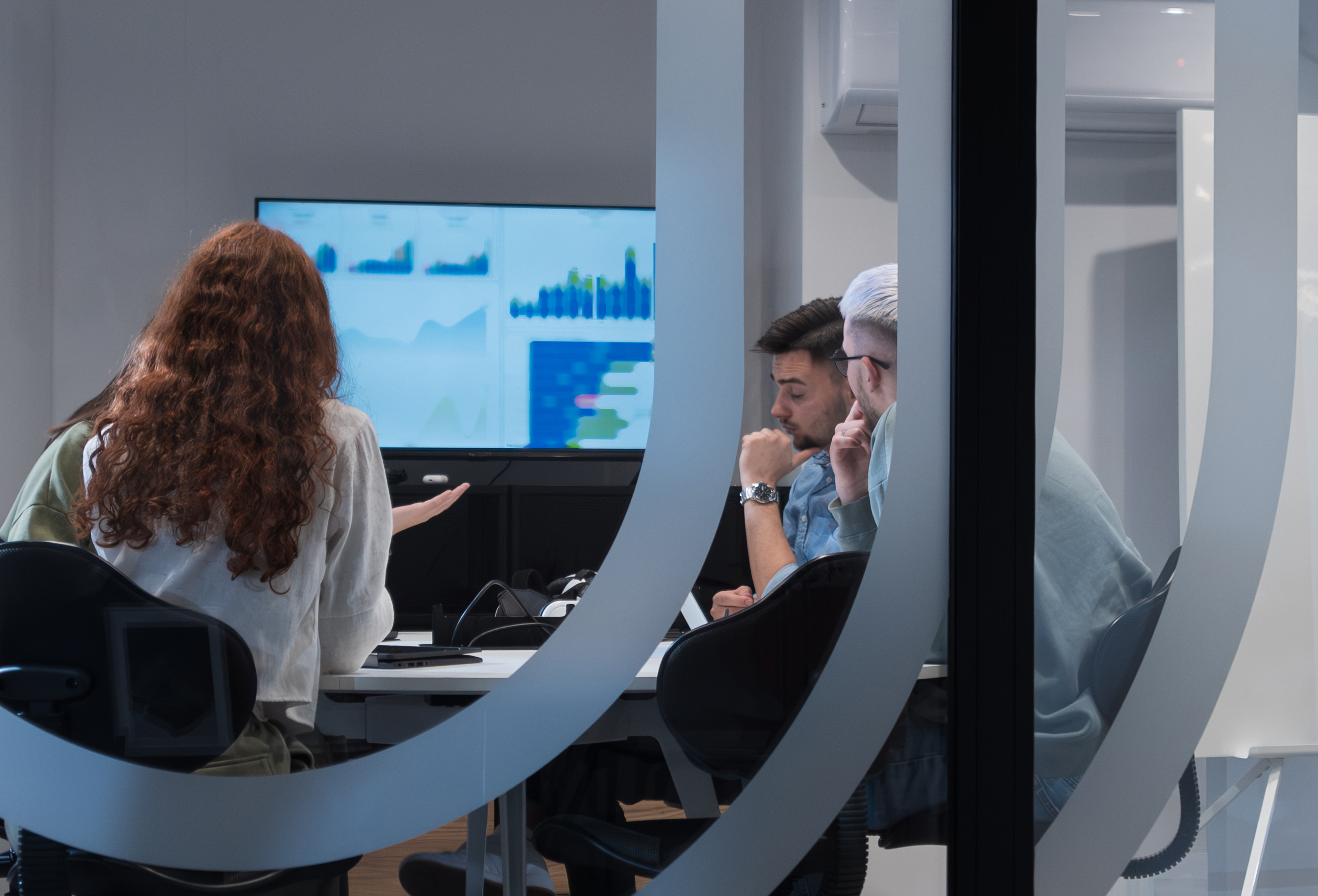
The Rise of Intelligent Meeting Rooms: What’s Next for AV?
Meeting rooms have come a long way from the days of a screen, a projector and a conference phone. Today, technology is becoming increasingly intelligent, automated and responsive – changing the way people interact with meeting spaces and with each other.
The next evolution of workplace AV is the intelligent meeting room: spaces that can understand how they are being used, automate routine tasks and help create a more seamless meeting experience.
But what does this mean for businesses?
AI is changing the meeting experience
Artificial intelligence is already making its way into meeting platforms, with features such as automated transcription, meeting summaries, speaker identification, noise suppression and real-time translation.
As AI capabilities continue to develop, we can expect meeting rooms themselves to become more responsive. Cameras and microphones may increasingly use AI to identify active speakers, optimise framing and improve audio quality without requiring users to adjust settings manually.
The goal isn’t to make meetings more complicated with more technology. It’s the opposite: technology that works quietly in the background, allowing people to focus on the conversation rather than the room.
Automation makes rooms easier to use
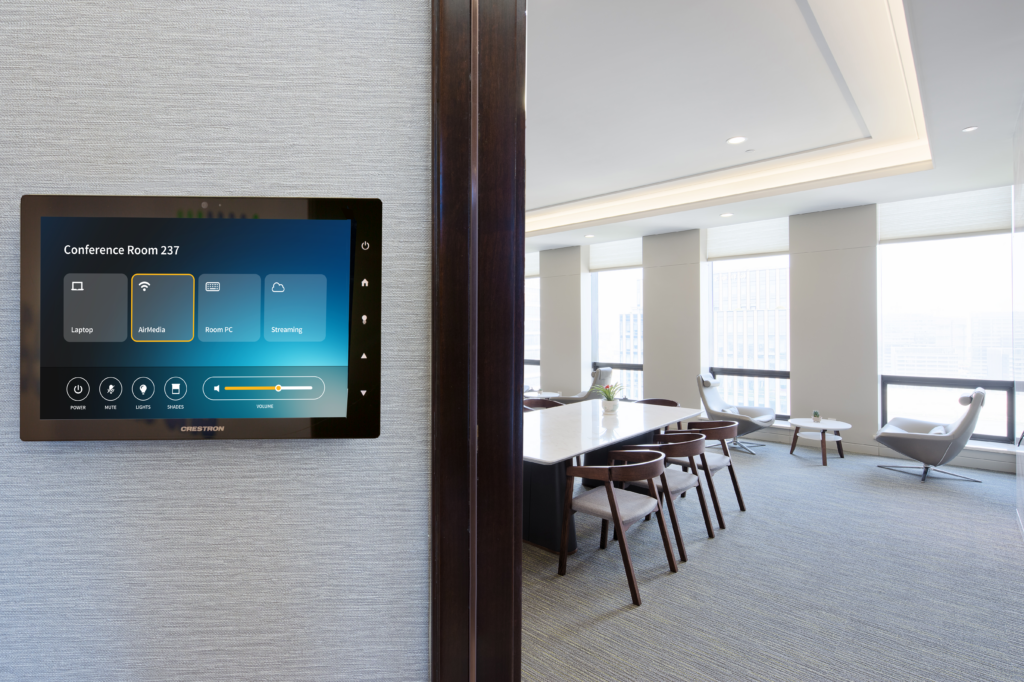
Automation is another key part of the intelligent meeting room. Instead of users having to manually switch inputs, adjust displays or configure equipment, room systems can automate these processes based on how the space is being used.
For example, a meeting room could automatically detect when someone enters, activate the appropriate display and audio system, and select the correct source. When the meeting finishes, the room can return to an energy-efficient standby state.
Smart switching can also make it easier to move between presentation sources, video conferencing and content sharing without the need for users to navigate complicated controls.
Data can help optimise your meeting spaces
One of the biggest opportunities offered by intelligent AV is analytics.
Meeting room technology can provide insights into how spaces are being used – including room occupancy, utilisation rates, meeting patterns and equipment performance.
For facilities and IT teams, this information can help answer important questions. Are some rooms consistently underused? Do certain spaces regularly reach capacity? Are there recurring technical issues? Is the organisation investing in the right mix of meeting spaces?
Instead of making decisions based on assumptions, businesses can use real-world data to optimise their workplace technology and spaces.

What’s next for intelligent meeting rooms?
The future is likely to see greater integration between AV, workplace systems, building technology and AI. Meeting rooms could become increasingly proactive—anticipating user needs rather than simply responding to commands.
However, intelligent technology should always serve a purpose. The best meeting room isn’t necessarily the one with the most technology; it’s the one that makes collaboration simple, reliable and intuitive.
For organisations planning their next meeting room upgrade, now is the time to think beyond individual devices and consider the bigger picture: how technology, automation and data can work together to create better experiences.
At TenFour, we help organisations design, integrate and support AV and unified communications environments that are built around the way people work. From intelligent meeting rooms and smart control systems to Microsoft Teams Rooms and ongoing support, we can help you prepare your workplace for what’s next.